Claude vs ChatGPT for coding: which fits your workflow?
Claude and ChatGPT are both capable coding assistants with similar published prices and context windows at comparable tiers. Pick by workflow and test both.

On this page
Both Claude (Anthropic) and ChatGPT (OpenAI) are capable coding assistants, and on paper they're close: comparable tiers have similar API prices, and both vendors' current models list context windows of about a million tokens. The real difference is workflow: which coding agent fits how you work, and which API your app will call. Try both on a real task from your own project before you commit.
By Gary, Greenlight · Last checked: Oct 19, 2026 · Drafted with AI tools and reviewed before publishing. We don't rank vendors and aren't affiliated with either. No benchmarks here: we only list facts each vendor publishes.
Side by side: what each vendor publishes
As of Oct 19, 2026, from each vendor's official docs (Anthropic models (external), Anthropic pricing (external), OpenAI models (external), OpenAI pricing (external)). API prices are USD per million input / output tokens.
| Anthropic (Claude) | OpenAI (ChatGPT, Codex) | |
|---|---|---|
| Vendor's suggested starting model | Claude Opus 5.5: $4 / $20 | GPT-6 Astra ("flagship model for complex reasoning and coding"): $10 / $50 |
| Balanced tier | Claude Sonnet 5.5: $2 / $10 | GPT-6.1 Sol: $2 / $10 |
| Low-cost tier | Claude Haiku 5.5: from $0.10 / $0.50 | GPT-6 Luna: $0.10 / $0.50 |
| Top tier | Claude Fable 5.1: $10 / $50 | GPT-6 Astra: $10 / $50 |
| Context window (current models) | 1M tokens | 1,050,000 tokens |
| Max output | 128K tokens | 128,000 tokens |
| Batch discount | 50% off with the Batch API | Batch pricing offered (see OpenAI's pricing page) |
| Coding agent | Claude Code | Codex |
| Agent included with a chat plan? | Yes: Claude Code is in all paid Claude plans | Codex works with a ChatGPT account, or with an API key at API rates |
Notes: Haiku 5.5's listed price is for prompts up to 100,000 tokens; longer prompts cost more. OpenAI's prices shown are its short-context rates; long-context rates are higher. Prices change, so check both pages on the day you decide.
Coding agents: Claude Code vs Codex
Both vendors offer an agent that reads and edits files in your project and runs commands, so permissions matter with either.
- Claude Code (docs (external)) runs in the terminal, in IDE extensions (VS Code and JetBrains), in a desktop app and in the browser. It reads a
CLAUDE.mdfile of project instructions and can read an existingAGENTS.mdinstead. Per Anthropic's pricing page (external), it's included in all paid Claude plans (Pro is $20 a month billed monthly) and can also run on pay-as-you-go API credits. See our guide to Claude Code permissions and sandboxing. - Codex (OpenAI) runs as a CLI, an IDE extension and in the cloud, and reads project instructions from
AGENTS.md. Per OpenAI's security docs (external), it runs with network access off by default and, locally, uses an OS-enforced sandbox (typically limited to the current workspace) plus an approval policy that decides when it must stop and ask. Per OpenAI's Codex pricing docs (external), you sign in with a ChatGPT account or use an API key, with API usage charged at standard API rates.
Whichever you use, read its permission settings before letting it edit your app, and don't approve every prompt by reflex.
The short version
| Question | What to compare |
|---|---|
| Where do you code? | Chat app, editor extension or terminal agent |
| How big is your codebase? | Both list very large context windows; test how each handles your many-file changes |
| Are you building on the API? | Model prices at the tier you need, rate limits, SDKs and docs |
| Already paying for a chat plan? | Claude Code comes with paid Claude plans; Codex works with a ChatGPT account |
| Who reviews the code? | Either tool's output still needs review before launch |
We're not publishing a benchmark. Model versions change every few months, so a ranking goes stale fast. Instead, run the same test on both.
How to compare them on your own project (30 minutes)
- Pick three real tasks: a bug fix, a small feature and a refactor from your repo.
- Give both the same prompt and the same files, at comparable tiers (for example, Sonnet 5.5 vs GPT-6.1 Sol, which list the same price).
- Score each answer: did it run, did it change files you didn't ask about, and did it explain its changes?
- Check cost: for API use, log input and output tokens and multiply by each vendor's current price (see our Claude API pricing breakdown and OpenAI's pricing page).
- Pick the one that wins on your tasks, not someone else's.
If your app calls the API: same security rules for both
Whichever model you choose, the API key is the part that most often goes wrong in AI-built apps:
- Keep the key on the server. Neither vendor's key belongs in a
VITE_orNEXT_PUBLIC_variable or anywhere in browser code. - Call the model from a server-side route, and have your frontend call that route.
- Set spend limits in each vendor's dashboard.
- Rotate a key immediately if it leaks. See Claude API key security.
Before you ship code from either assistant
AI-written code still needs launch checks:
- Turn on database access rules (what Supabase RLS is).
- Keep secrets out of the frontend (is the Supabase anon key safe?).
- Turn off production source maps and make sure
.envisn't served. - Confirm HTTPS and security headers.
- Keep frameworks current (see our Next.js security update).
FAQ
Is Claude or ChatGPT better for coding? It depends on your tasks and tools. Their published prices and context windows are close at comparable tiers, so test both on three real tasks from your own project and compare results and cost.
Which is cheaper for coding? At the balanced and low-cost tiers, the list prices are the same as of Oct 19, 2026 (Sonnet 5.5 and GPT-6.1 Sol: $2/$10; Haiku 5.5 and GPT-6 Luna: from $0.10/$0.50 per million tokens). Each vendor suggests a different default model, and token counts differ by model, so measure with your real prompts.
What's the difference between Claude Code and Codex? Both are coding agents that edit files and run commands. Claude Code runs in the terminal, IDEs, a desktop app and the browser and is included in paid Claude plans. Codex runs as a CLI, IDE extension and in the cloud and works with a ChatGPT account or an API key.
Can I use both? Yes. You can use one for chat and the other in your editor or as an agent. Keep each API key separate and server-side.
Do I need to review code from Claude or ChatGPT? Yes. Either can produce code that runs but leaves a setting off, such as a database rule or a key in the frontend.
What does Greenlight's free scan check?
From the outside only: HTTPS, security headers, exposed .env and .git files, public source maps, and common secret key patterns in your homepage's scripts, including Anthropic and OpenAI API key formats. If it finds a Supabase project and its public key there, it counts which tables return rows to that public key (it reads no row data). It doesn't log into your builder or Supabase, read your code repository or RLS policies, or test logins and app logic, and "nothing found" isn't a guarantee.
Sources
- Claude docs: Models overview (external)
- Claude docs: Pricing (external)
- Claude Code docs: Overview (external)
- Claude pricing page (plans) (external)
- OpenAI API docs: Models (external)
- OpenAI API docs: Pricing (external)
- OpenAI docs: Codex agent approvals and security (external)
- OpenAI docs: Codex pricing and plans (external)
On this site
Related posts
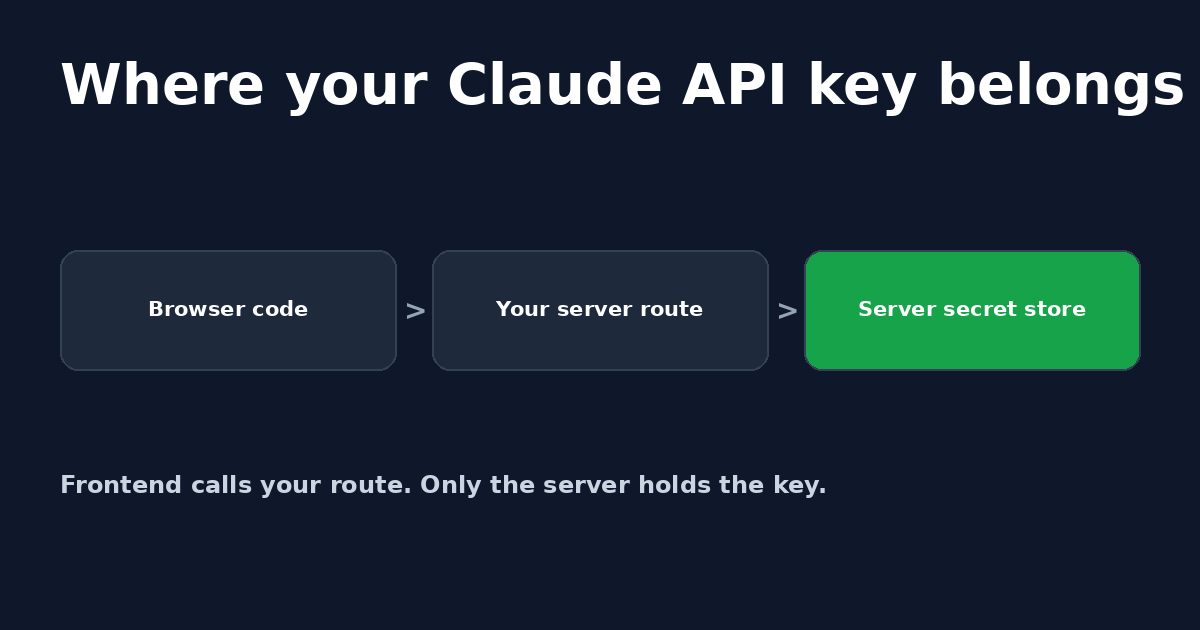
Claude API key security: how to keep your Anthropic key safe
A Claude API key works like a credit card for your Anthropic account. Where to store it, why it never belongs in frontend code, and what to do if it leaks.
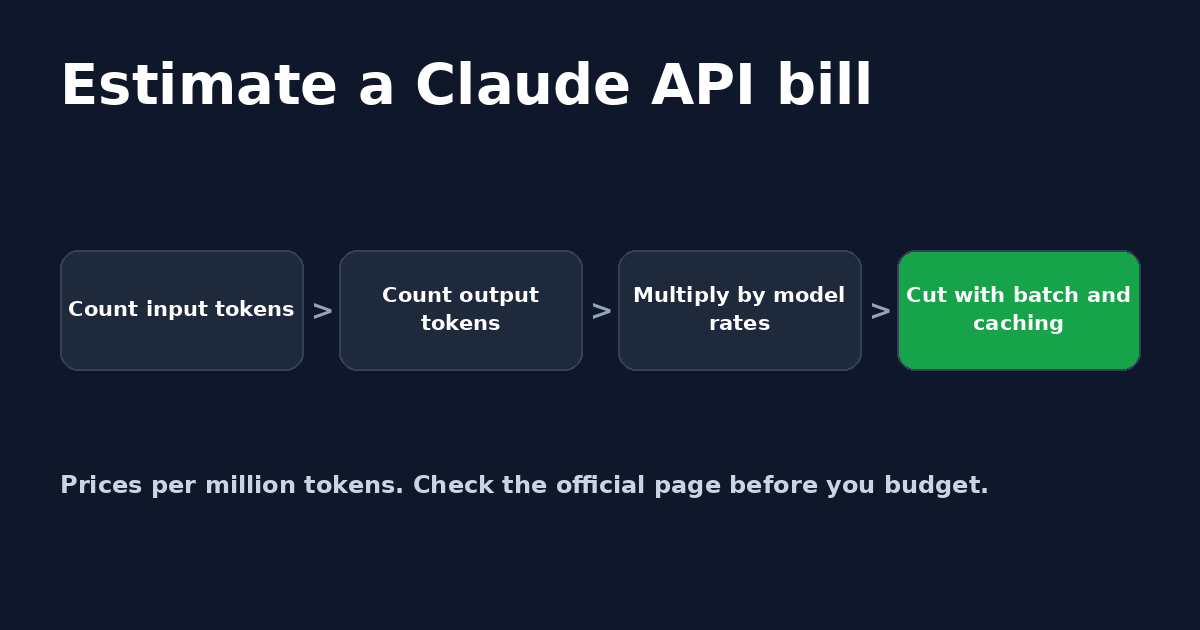
Claude API pricing (October 2026): what it costs and how to estimate your bill
Claude API pricing as of Oct 19, 2026: per-token rates for Opus, Sonnet and Haiku, worked cost examples, and how batch and caching lower your bill.


Greenlight is independent and not affiliated with or endorsed by Anthropic, Claude, Claude Code, OpenAI, ChatGPT, Codex, VS Code, JetBrains, Supabase, Vite or Next.js. Product names are used only to identify the tools this guide is about. We don't rank vendors. Prices and specs are from each vendor's published docs as of Oct 19, 2026 and can change. This page is general information, not professional security advice, legal advice, a security audit or a guarantee. Check your own setup against the vendor's current docs.